

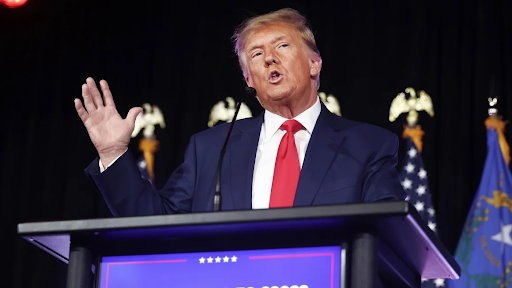
Photo Credit: Mario Tama
By James King
Editor in Chief
One of the major policies Trump campaigned with during the 2024 election was a new tariff plan that proposed setting up and raising tariffs on all imported goods from anywhere between 10-20% and raising Section 301 tariffs on Chinese goods to 60%. Tariffs are essentially taxes imposed by a country on imports or exports. The goal of these proposed tariffs is to raise more money for the government through these taxes while also attempting to limit the number of imported goods so that products made in the United States are more competitive with imported goods. The increased competition is hoped to also create more of a demand for industry and therefore create more jobs. However, I personally believe that these issues will not help the economy and the United States, but instead harm the country and hurt our economy.
Raising tariffs like these present major problems for the United States economy. While it seems like they would actually raise revenue for the country and create a new need for jobs, I estimate that doing so would accomplish neither. I highly doubt that any company would be willing to stop using cheap labor and importing cheap goods and instead create more domestic factories where they need to make higher quality products and pay fair wages. It does not make any sense at all for any company to give up those things.
While I do believe domestic production vs. foreign production is a problem in the United States, I do not believe that tariffs are a good way of combating them. It would be more beneficial to create incentives for businesses to invest and create more production operations inside the United States. Various incentives that might interest companies could be further federal grants or investments, more contracts available, or tax cuts of businesses. Incentives like these are far more likely to persuade companies toward producing more products domestically rather than just trying to put tariffs on imported goods from other countries and hoping that domestic businesses will pick up the slack.
During an interview with Mr. Livieratos, a former AP Microeconomics/Macroeconomics and AP Government teacher, he was asked if he predicts that “an increase in tariff prices will increase prices of goods within the US.” Mr. Liveratos responded by saying “I think a lot of it right now is political posturing. But yes, if it were to go through, I think in general, we would see a rise of prices.” I agree heavily with Mr. Liveratos on this point. There is nothing stopping companies from just off putting the cost of the tariffs onto the consumer. Doing so would allow the companies to continue as normal and potentially even make more money if they were to raise the cost of goods even higher and blame it on this reason.
President Trump has also proposed some tax cuts inside the United States. In a great study by the Tax Foundation, an organization dedicated to researching taxes and economic issues in both the US and Europe, they predicted that these tax cuts would raise the United States GDP of about 2.4% in the long term. However, they also predict that this GDP increase would have minimal impact on our economy because more than half of the increase would be taken away by the consequences of the proposed tariffs, which would decrease the US GDP by about 1.7%. This decrease does not account for the possibility of retaliation by other countries as well, which would likely decrease the GDP further.
 hhsbearpress.com